


The Vibration Fatigue Crisis: Why High-End Moto Light Systems Fail on the Open Road
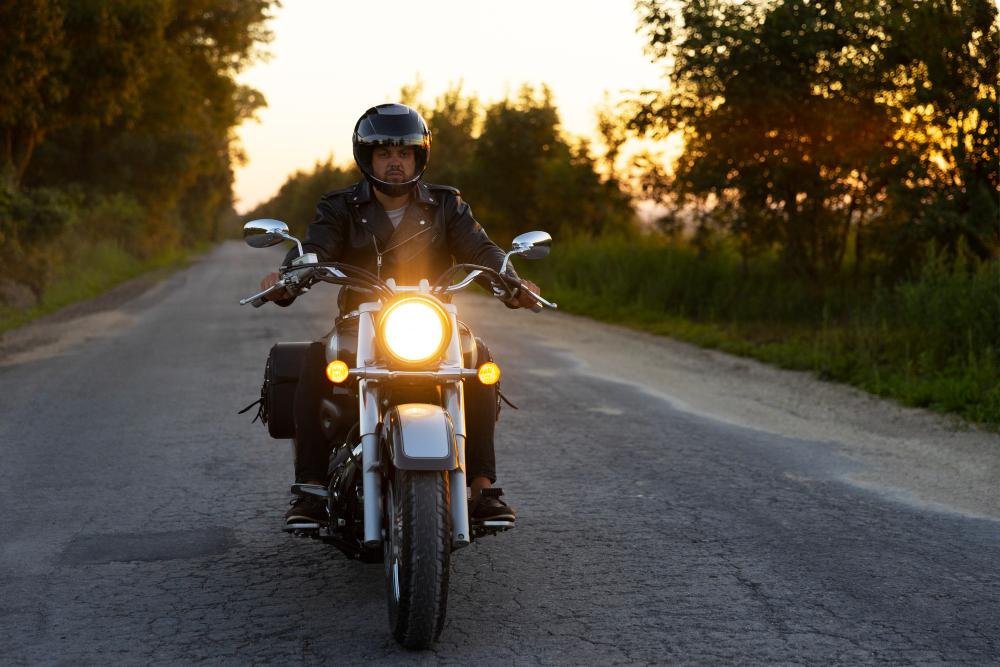
In the world of motorcycle touring and adventure riding, we have hit a technological ceiling. We can produce thousands of lumens from a 2-inch pod, but we haven't yet solved the "Life-Cycle Paradox." While a high-quality moto light is rated for 50,000 hours in a lab, the reality of 2026 riding conditions—characterized by high-frequency engine harmonics and extreme thermal loads—often sees these units failing in under 500 hours.
1. Harmonic Vibration vs. Solder Integrity
The biggest enemy of a modern moto light isn't water or dust; it's the specific frequency of motorcycle engines. Unlike cars, where lights are mounted to a dampened chassis, motorcycle auxiliary lights are often bolted directly to the forks or crash bars.
-
The Problem: V-Twin and large-displacement single-cylinder engines create "harmonic resonance." This vibration travels through the mounting bracket and directly into the LED’s internal driver board.
-
The Result: Over time, these micro-vibrations cause solder joint fatigue. Even the most expensive light pods will experience "ghost flickering" or total failure when a surface-mount component literally shakes itself off the PCB.
2. The Thermal Throttling Wall
Modern LED pods have become so small that they lack the physical surface area to dissipate the heat they generate. To prevent the diode from melting, manufacturers use Active Thermal Management (ATM).
-
The Crisis: On a hot 2026 summer day, if you are stuck in traffic or moving at slow speeds on a trail, your moto light will hit its thermal ceiling within minutes.
-
The Hidden Failure: The internal sensors will "throttle" the power to 40% of its advertised output. You paid for a 5,000-lumen light, but in the conditions where you need it most (slow, technical terrain), the light is under-performing just to stay alive.
3. The "Ventilation Paradox" and Internal Fogging
Every high-performance light needs to "breathe" to account for pressure changes. Most use a Gore-Tex membrane vent.
-
The Issue: On a motorcycle, these vents are exposed to high-pressure water during rain at highway speeds.
-
The Failure: Once the membrane is slightly compromised by road salt or oils, moisture enters the housing. Because the LEDs don't produce enough IR heat to evaporate that water (unlike old halogens), the moisture stays trapped. This results in reflector oxidation, which permanently ruins the beam pattern and lowers the light's effective reach.
The Failure Matrix: Why Price Doesn't Always Equal Longevity
| Technical Factor | Cheap Aftermarket | High-End "Moto Light" | The Engineering Gap |
| Driver Mounting | Glued / Floating | Potted (Epoxy Filled) | Even potting can crack under extreme $G$ loads. |
| Lens Material | Acrylic (Yellows) | Hard-Coated Polycarbonate | Impact resistance is high, but thermal expansion differs from the housing. |
| Heat Sink | Thin Fins | Heavy Die-Cast Aluminum | Small mass cannot overcome "heat soak" in stationary traffic. |
The Engineering Path Forward
To move past these industry-wide failures, we need to stop looking at lumens and start looking at mechanical isolation. The next generation of moto light technology must move toward:
-
Nitrogen-Purged Housings: Eliminating the "breathing" vent entirely to stop internal oxidation.
-
Isolated Internal Drivers: Suspending the circuit board on silicone dampeners inside the housing to decouple it from engine harmonics.
-
Variable-Frequency Drivers: Systems that can detect vibration patterns and adjust current to prevent internal resonance.
Conclusion
The "spam" phase of motorcycle lighting—where every brand promised the brightest beam—is over. The real challenge for 2026 is building a light that can actually survive the violent environment of a motorcycle's front end without dimming, flickering, or fogging.

 English
 Arabic
 French
 Spanish
 Portuguese
 Deutsch
 Dutch
Dutch
 Italiano
 Russian
 Romaian
 Portuguese (Brazil)
 Greek
Greek