


Mastering the Complexity of Bird Bath Optical Modules
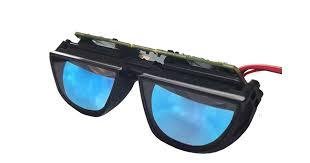
Integrating a Bird Bath optical module into a sleek AR headset is a major engineering hurdle. If your display shows fuzzy edges or low contrast, the issue usually lies in the alignment of the beamsplitter and the mirror.
In the B2B wearable market, balancing weight with optical clarity is a constant struggle. Most engineers face significant "ghosting" when the internal reflections aren't managed by high-quality anti-reflective coatings on every surface.
As an experienced manufacturer, we see how thermal expansion can ruin a perfect calibration. Success requires a deep focus on stable mounting and precision-grade lenses to ensure the virtual image stays sharp for every end user.
The Technical Friction of Bird Bath AR Integration
In the world of consumer and enterprise Augmented Reality, the Bird Bath optical engine is favored for its large Field of View (FoV) and relatively simple manufacturing path compared to waveguides. However, moving from a laboratory prototype to a mass-produced consumer product reveals three critical pain points for B2B engineering teams.
1. The Light Leakage and "Glow" Challenge
Because the Bird Bath architecture relies on a 45-degree beamsplitter and a curved combiner, light can escape the housing.
-
The Problem: Users often see a "glowing" box around the digital content, which ruins the immersion.
-
The B2B Fix: You must use specialized light-shielding baffles and black-matrix coatings inside the module to absorb stray photons. This is vital for maintaining high contrast ratios in varying ambient light conditions.
2. Ghosting and Internal Reflections
Every time light passes through a surface in a Micro OLED-driven module, there is a chance for a secondary reflection.
-
The Double Image: A faint "ghost" of the text or icon appears slightly offset from the main image.
-
Calibration Drift: Without a mechanically stable frame, the distance between the display and the optical combiner can shift, causing the image to go out of focus.
3. Thermal Management and Form Factor
Bird Bath modules are often bulky. To make them "wearable," engineers push the components closer together.
-
The Heat Trap: The Micro OLED display generates heat that can warp the plastic optical elements if not dissipated.
-
Optical Distortion: As the plastic heats up, its refractive index changes slightly, leading to "swimmy" visuals that cause eye strain and motion sickness.
Engineering Strategies for High-Performance AR Wearables
To move past these common bottlenecks, your R&D and procurement teams should focus on these specialized optoelectronic solutions:
-
Aspheric Combiner Lenses: Using aspheric (non-spherical) shapes for the curved mirror reduces chromatic aberration (color fringing) at the edges of the display. This ensures that text remains readable across the entire 40-50 degree FoV.
-
Broadband Anti-Reflective (BBAR) Coatings: Don't settle for standard coatings. Request custom BBAR layers that are optimized for the specific blue, green, and red wavelengths of your display module to maximize light throughput.
-
High-Precision Alignment Jigs: During assembly, the tilt of the beamsplitter must be accurate to within microns. Using automated active alignment ensures that the virtual image is perfectly centered for both eyes (binocular overlap).
The Role of Bird Bath in the Enterprise Sector
While waveguides are becoming popular, the Bird Bath optical module remains the workhorse for industrial training and remote assistance. It offers superior brightness—often exceeding 2,000 nits to the eye—which is necessary for outdoor use. For B2B buyers, this means you can offer a high-visibility product without the extreme cost and complexity of diffractive optics.
Performance Comparison Matrix
| Feature | Standard AR Optics | Advanced Bird Bath Module |
| Brightness | Low (Efficiency < 10%) | High (Efficiency 20-30%) |
| Field of View | Narrow (30°) | Wide (Up to 52°) |
| Manufacturing Cost | Very High (Waveguide) | Moderate & Scalable |
Why Consistency in Bulk Supply is Mandatory
In the B2B supply chain, "good enough" leads to expensive returns. Every Bird Bath module in a production run must have identical color balance and focal depth. Working with a manufacturer that utilizes automated optical testing (MTF measurement) ensures that your hardware provides a professional, high-fidelity experience from day one.
Conclusion
Arvr-Optical is a premier manufacturer and supplier of high-precision Bird Bath optical modules. We offer custom integration and bulk supply to solve your B2B AR hardware challenges.

 English
 Arabic
 French
 Spanish
 Portuguese
 Deutsch
 Turkish
 Dutch
Dutch
 Italiano
 Russian
 Romaian
 Portuguese (Brazil)