


How to Optimize Layouts for Custom Kraft Paper in Packaging Design
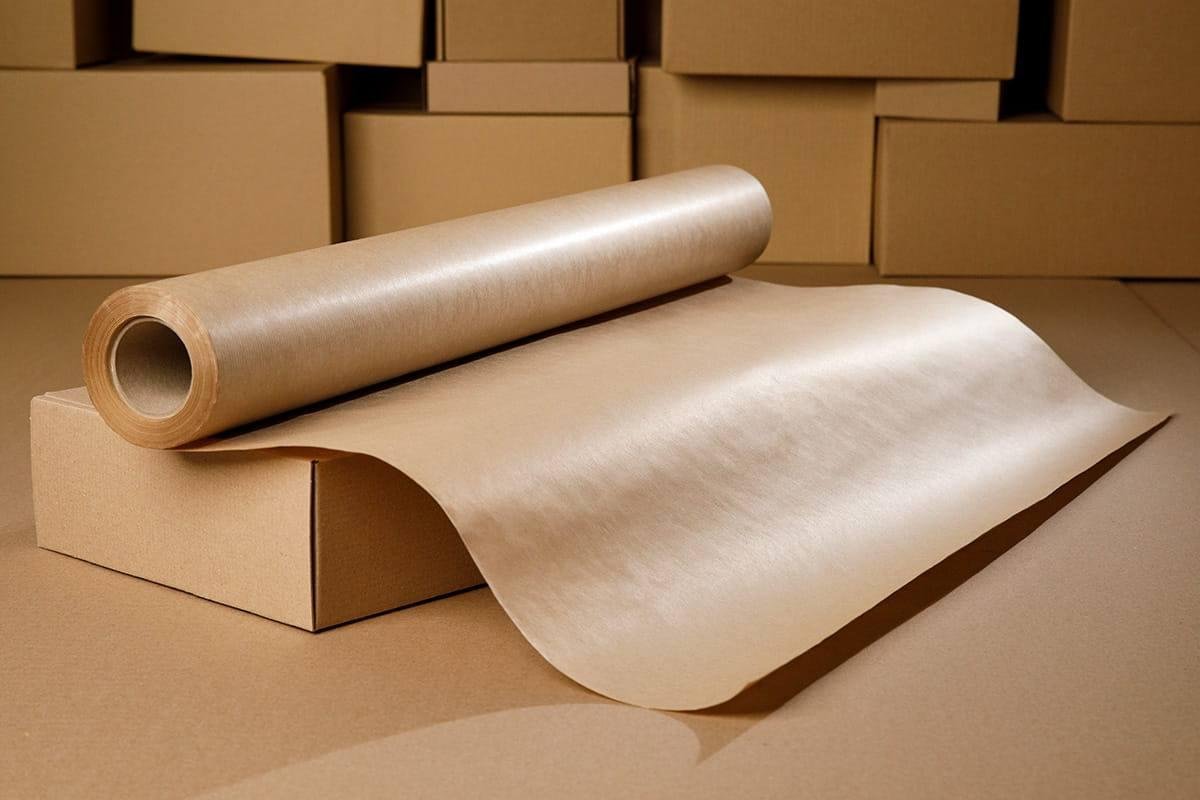
The design needs to incorporate viable design options that strike the perfect ratio between utility and decor when it comes to coming up with the proper layout of custom kraft paper. Most companies use Kraft to pack their goods due to its natural beauty and durability. Layout optimization refers to the process where print placement, color coordination, and the entire design flow are put into consideration. An optimized design will help the paper reflect brand identity yet be visually appealing. Designs determine what customers see in packaging at a glance. Well-built layout turns the kraft into paper more than mere paper.
Design Principles
Any work layout commences by learning the basic principles of design. The alignment, space, and balance of kraft paper are the three points that designers need to put emphasis on when preparing surfaces. It is important to select the proper color palette as well, as dim colors are likely to look good with the earthy backdrop. Patterns must be repeated actually on the surface in order to avoid clutter. Typography should be proportioned well so as not to look overbearing on the layout. Only to a small degree does bulk carry out a greater impact than an overload of detailing. All design options, such as imagery and spacing, influence the look of the end product. Professional layouts are directed by well-planned design principles.
Wrapping Techniques
Wrapping techniques are key components when optimizing layouts to give them a refined appearance. Kraft wrapping paper is commonly used to emphasize natural colors, which are compatible with a minimalist style. Lays should be taken into account during the layout process to make prints visible. To achieve a smooth result when folding or cutting, designers tend to design characteristics that are repeated to look continuous. A correct timing prevents awkward wrapping breakages in logos or messages. Visual consistency across multiple folds strengthens brand recognition. Strategies are employed to accommodate the wrapping of the layout, as well as to curtail superfluous wastage. This is a utilitarian method to make it look and work.
Roll Layouts
When developing around a kraft paper roll, it should be designed differently from a flat sheet of paper. The recurring motifs ought to be spaced evenly, in order to allow the low of the paper when the process of unrolling the paper occurs. The elements of logic or branding must be visible at regular intervals to increase the visual levels. To eliminate upside-down graphics, the direction of unrolling must be taken into consideration on the side of the designers. Repetition must counterbalance density enough with openness to give an attractive rhythm. For some layouts, alternating patterns are used as a source of variation. A consequence of consistency in several roles is professional quality. These roll-based layouts are planned to maintain the brand identity when used in large turnkey packaging operations.
Sheet Planning
Flat layout planning involves strict adjustments in using kraft paper sheets. Spacing, margins, and symmetry can be controlled per sheet. Graphics must be centered in order to provide balanced cut lines. Grid systems are commonly included in the design to match the logos and text. Layouts that are sheet-based permit more control over one-off or small packaging tasks. This is the reason why sheets are the best for testing new designs prior to large production. Correct planning on sheets enables the brands to project how the designs will work whilst using different packaging types. Product photography and presentation are also good on sheets.
Printing Choices
Layouts in the printed product depend on the method used for paper kraft printing. Screen printing, with its focus on bold graphics, and digital printing, with its ability to produce complicated pattepatternsan be used. Foil stamping is used to bring emphasis to certain parts of a design to form points of interest. Depending on the method of printing selected, layouts should be optimized to be easy to understand. Kraft ink absorption needs to be tested with a lot of care. Subtle colors are likely to be faint; therefore, striking contrasts can be useful. Designers should scale their layout to make the most out of any one printing method used. This has led to efficient designs.
Branding Focus
Identity and values to be emphasized on a solid layout must be presented with consistent branding. Fineras that are professionalized do not have to depend on logos, patterns, and taglines to convey authenticity. An even distribution of repeated logos in the paper makes the paper appealing in an almost professional way. The layouts must not have too many modules, which can weaken the brand awareness. Cohesive branding through patterns reinforces trust and familiarity. The negative space can be used to provide subtle but useful branding by designers. Each piece of information is used to create a perception of packaging among the customers. Emphasizing branding doesn’t mean merely decoration, so layouts are considered to be marketable.
Printed Styles
Life priorities would get a personalized layout with a Custom papers wholesale, where graphics and logos are used to make it look good. The layouts need to be planned in a way that allows elements to be viewable through more than one angle once printed. Large surfaces are sharp due to high-resolution imaging. Repetition needs to strive to create a balance between aesthetics and brand communication. Structures must be placed in such a way that the customer follows the surface with the eyes. Light and dark prints are used and make a powerful impression. Designers run several prototypes to tune up space and composition. An effective printed layout is one that can be both beautiful and branding with very little effort.
Conclusion
There is perceptiveness, accuracy, and imagination required in custom kraft paper layout optimization. The designs planned by brands should be simple yet effective when it comes to communicating. All the details count: roll alignment and sheet symmetry, wrap methods, and wholesale manufacturing. The designs can be based on the constant branding with molding to various printing strategies. When properly engaged, kraft paper works to become a continuation of the brand story. Layouts serve as an ambassador since customers will interact with the packaging prior to the products. The businesses that have perfected the layout optimization gain a competitive advantage. Good designs will make kraft packaging look professional, beautiful, and memorable.

 Arabic
 French
 Spanish
 Portuguese
 Deutsch
 Turkish
 Dutch
Dutch
 Italiano
 Russian
 Romaian
 Portuguese (Brazil)
 Greek
Greek