


Why Digital Printing Boosts Design Flexibility
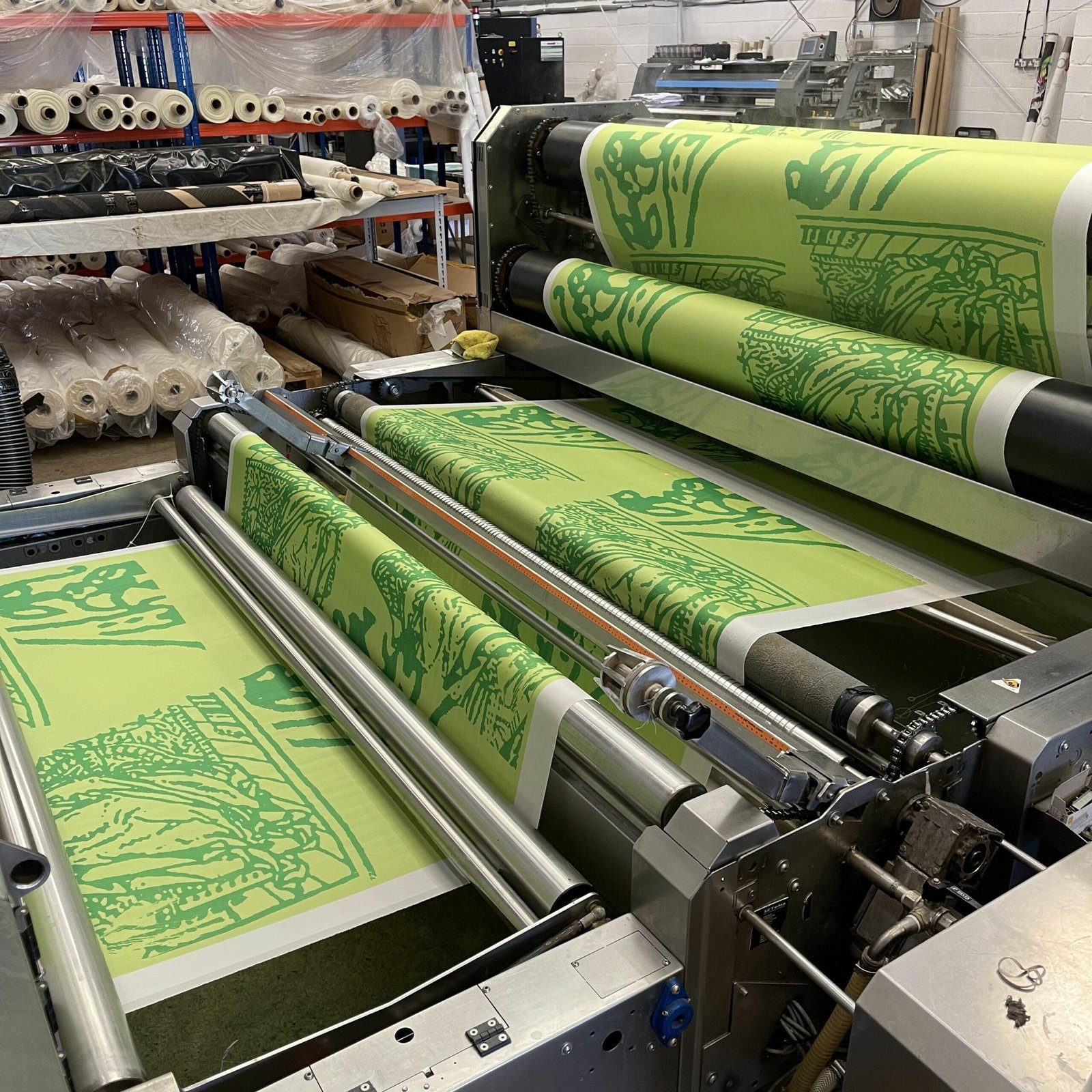
In today’s competitive fashion and textile market, the ability to adapt designs quickly can determine the success of a collection. Designers are expected to innovate constantly, experiment with colors and patterns, and respond rapidly to market trends. Traditional printing methods often limit this flexibility due to long setup times, fixed screens, and minimum order requirements.
Digital printing addresses these constraints, allowing designers to explore new ideas without the usual technical or financial barriers. With digital fabric printing, designers can experiment with complex artwork, adjust colors instantly, and produce small batches, making the creative process far more dynamic and responsive.
This capability transforms the way designers approach textile design, enabling a level of flexibility that was difficult to achieve with conventional printing methods.
Freedom To Use Complex And Intricate Designs
One of the most significant advantages of digital printing is its ability to handle highly detailed and complex designs. Traditional screen printing limits the number of colors and requires precise registration for each layer, which makes intricate patterns challenging and costly.
Digital printing allows designers to:
-
Use unlimited colors without additional setup cost
-
Include gradients, photographic elements, and textures
-
Print fine lines and delicate motifs accurately
With digital fabric printing, these complex designs can be applied to a variety of fabrics, enabling creativity without compromise. This opens up new possibilities for designers to differentiate their products and maintain unique visual identities.
Quick Iterations And Design Adjustments
Trends in fashion move quickly, and designers often need to revise patterns or colors at the last minute. Traditional methods require new screens or adjustments in the printing machinery, which adds time and cost.
Digital printing allows immediate changes. Designers can:
-
Modify digital files on the computer
-
Preview colors and patterns before printing
-
Apply changes instantly to fabric without extra setup
This speed allows designers to iterate rapidly, test different ideas, and refine their collections. In digital fabric printing, the process becomes highly adaptive, reducing the gap between concept and production-ready textile.
Small-Batch And On-Demand Customization
Design flexibility is not just about visuals; it also involves production scale. Limited editions, capsule collections, and bespoke orders require printing methods that can accommodate small quantities efficiently.
Digital printing enables small-batch production without the cost penalties associated with traditional printing. Designers can:
-
Produce multiple variations of the same design
-
Adjust size, placement, and repeat for each batch
-
Offer personalized or customized textiles for individual clients
Using digital fabric printing, brands can respond quickly to customer demand while maintaining high-quality output, making limited or custom collections more feasible and profitable.
Easy Color Experimentation And Consistency
Color is a critical element of textile design. Traditional printing often restricts experimentation due to the cost of creating new screens for each color. Mistakes or misalignments can lead to wasted fabric and resources.
Digital printing allows designers to experiment freely:
-
Change hues, shades, or combinations digitally
-
Apply color corrections instantly
-
Reproduce colors consistently across different production runs
With digital fabric printing, designers achieve both creative freedom and reliable color accuracy, ensuring that their vision is realized on the fabric without unnecessary trial-and-error cycles.
Integration With Digital Design Tools
Modern design workflows often involve CAD, 3D rendering, and virtual prototyping. Digital printing integrates seamlessly with these tools, allowing designers to preview prints on virtual garments or simulate repeat patterns.
This integration supports:
-
Alignment of prints with seams and panels
-
Simulation of scale and pattern repeats
-
Faster feedback loops between design and production
By combining digital fabric printing with digital design tools, designers can make informed decisions early in the development process, reducing errors and enhancing overall flexibility.
Reducing Waste And Optimizing Resources
Flexibility is also linked to efficiency. Traditional printing methods may require overproduction to compensate for setup errors or color variations. Digital printing reduces these risks.
Designers can print only what is needed, test multiple designs digitally before printing, and minimize material waste. Digital fabric printing allows both creative experimentation and responsible resource management, combining flexibility with sustainability.
Expanding Creative Opportunities
Digital printing encourages experimentation with unconventional designs and cross-disciplinary collaborations. Designers can combine textures, photographic images, and abstract patterns that would be difficult or impossible with traditional methods.
This opens new avenues for innovation, allowing brands to:
-
Launch unique collections that stand out in the market
-
Experiment with limited editions and rapid product cycles
-
Collaborate with artists and designers globally without technical barriers
By leveraging digital fabric printing, creative possibilities expand far beyond what was previously achievable in textile design.
FAQs
Q1: Does digital printing limit fabric choices?
Digital printing works on a wide range of fabrics including cotton, polyester, blends, silk, and more. Proper pre-treatment and ink selection are necessary to maintain color fidelity and durability.
Q2: Can digital printing handle very small runs?
Yes, small-batch and on-demand production are ideal for digital printing, allowing designers to produce limited editions without high setup costs.
Q3: Is color consistency achievable across multiple batches?
Yes. By using calibrated color profiles and standardized workflows in digital fabric printing, consistent colors can be reproduced reliably across different production runs.
Q4: Does digital printing replace traditional methods entirely?
Not necessarily. Digital printing complements traditional techniques, offering flexibility, faster iterations, and small-batch production while traditional methods may still be suitable for high-volume orders.
Q5: How quickly can design changes be implemented?
Changes can be made instantly on digital files, and new prints can be produced without creating new screens or adjusting machinery, significantly speeding up the design-to-production cycle.
Conclusion
Design flexibility is essential in today’s fast-moving textile and fashion industry. Traditional printing methods impose limitations that can restrict creativity, slow down production, and increase costs.
Digital fabric printing transforms this landscape by enabling intricate designs, rapid iterations, small-batch production, easy color experimentation, and seamless integration with modern digital tools. For designers, this flexibility means they can explore ideas freely, respond to trends quickly, and deliver unique, high-quality products to the market efficiently. The combination of creative freedom and operational efficiency makes digital printing a crucial tool for modern textile design.

 English
 Arabic
 French
 Spanish
 Portuguese
 Turkish
 Dutch
Dutch
 Italiano
 Russian
 Romaian
 Portuguese (Brazil)
 Greek
Greek