


Sustainable Sportswear Market: Market Insights and Forecast to 2032
" Sustainable Sportswear Market Summary:
According to the latest report published by Data Bridge Market Research, the Sustainable Sportswear Market
CAGR Value
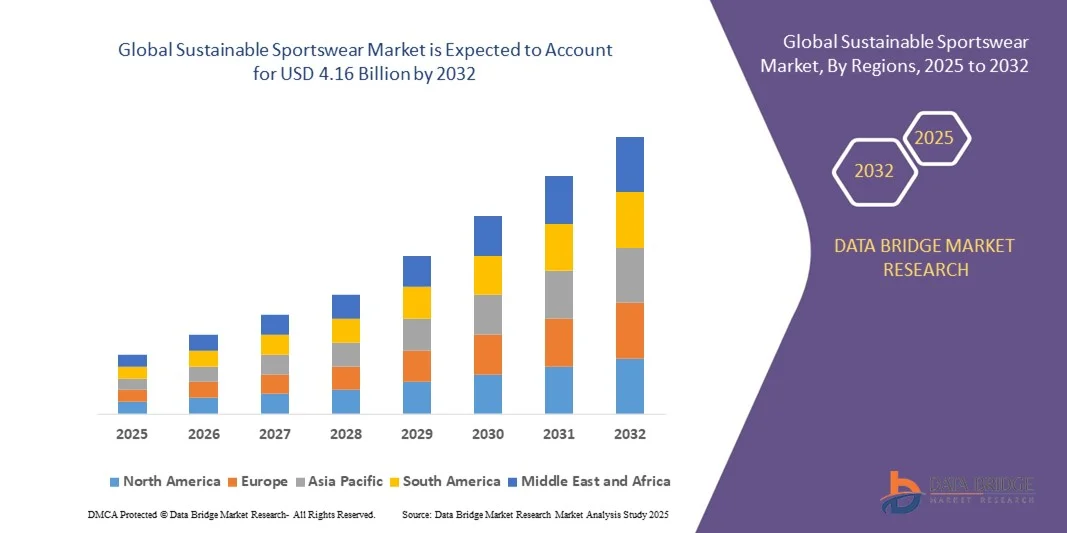
The global sustainable sportswear market size was valued at USD 2.77 billion in 2024 and is expected to reach USD 4.16 billion by 2032, at a CAGR of 5.2% during the forecast period
Market definition mentioned in this Sustainable Sportswear Market document covers the market drivers which indicate the factors causing rise in the market and market restraints which indicates the factors causing fall in the market growth. The report is generated based on the market type, size of the organization, availability on-premises, the end-users’ organization type, and the availability in areas such as North America, South America, Europe, Asia-Pacific and Middle East & Africa. Significant industry trends, estimations of market size and market share are analysed and discussed in this report. Different markets, marketing strategies, trends, future products and emerging opportunities are taken into account while studying market and preparing this Sustainable Sportswear Market document.
Stay informed with our latest keyword market research covering strategies, innovations, and forecasts. Download full report: https://www.databridgemarketresearch.com/reports/global-sustainable-sportswear-market
Sustainable Sportswear Market Segmentation and Market Companies
Segments
- Product Type: The sustainable sportswear market can be segmented based on product type into tops, bottoms, jackets, and others. Tops include t-shirts, tank tops, and jerseys, while bottoms encompass leggings, shorts, and pants. Jackets range from windbreakers to hoodies and track jackets. Other products may include accessories such as hats, socks, and gloves. Each category presents opportunities for sustainable materials and manufacturing processes.
- Distribution Channel: The market can also be segmented by distribution channel, including offline and online retail.Offline retail includes specialty sports stores, department stores, and brand outlets. Online retail encompasses e-commerce platforms and brand websites, offering a convenient way for consumers to access a wide range of sustainable sportswear from anywhere in the world.
- End-User: End-users in the sustainable sportswear market can be divided into men, women, and children. Each demographic has specific preferences in terms of design, functionality, and sustainability practices. Catering to the needs of different end-users allows companies to expand their market reach and capitalize on diverse consumer segments.
Market Players
- Nike, Inc.: Nike is a prominent player in the global sustainable sportswear market, offering a range of eco-friendly products made from recycled materials and innovative production techniques. The company's commitment to sustainability is reflected in its design process, supply chain operations, and community initiatives.
- Adidas AG: Adidas is another key player known for its efforts to incorporate sustainability into its sportswear products. The company focuses on creating high-performance apparel using recycled plastics, organic cotton, and other sustainable materials. Adidas also invests in renewable energy and waste reduction strategies to minimize its environmental impact.
- Puma SE: Puma is actively involved in promoting sustainable practices in the sportswear industry. The company emphasizes transparency in its supply chain and partners with organizations to drive positive change in the fashion sector. Puma's sustainable sportswear offerings appeal to environmentally conscious consumers looking for stylish and ethical clothing options.
- Under Armour, Inc.: Under Armour recognizes the importance of sustainability in sportswear and has introduced initiatives to enhance the eco-friendliness of its products. By incorporating recycled materials and adopting green technologies, the company aims to reduce its carbon footprint and promote a more sustainable future for the industry.
The global sustainable sportswear market is characterized by increasing consumer awareness of environmental issues, driving demand for ethically produced and eco-friendly clothing. Key players in the market are responding to this trend by innovating their product offerings and adopting sustainable practices throughout their operations. As the market continues to evolve, collaboration between industry stakeholders and a focus on sustainability will be crucial for driving growth and meeting the changing preferences of consumers.
The sustainable sportswear market is witnessing significant growth and evolution driven by a shift towards eco-conscious consumer behaviors and increasing demand for ethically produced and environmentally friendly clothing. One of the emerging trends in the market is the emphasis on circular fashion practices, where companies are focusing on creating products that can be recycled or repurposed at the end of their lifecycle, thus reducing waste and supporting a more sustainable supply chain. This approach not only aligns with consumer expectations but also contributes to the overall sustainability goals of the industry.
Another key aspect shaping the sustainable sportswear market is the rising adoption of innovative materials and technologies that minimize environmental impact while maintaining performance and style. Companies are investing in research and development to discover new sustainable fabrics, such as bio-based materials, plant-based fibers, and biodegradable textiles, to offer consumers a wider range of eco-friendly options without compromising on quality.
Moreover, the concept of transparency and traceability is gaining traction in the market as consumers become more concerned about the origins of their clothing and the production processes involved. Brands are increasingly sharing information about their supply chain practices, certifications, and sustainability initiatives to build trust with consumers and showcase their commitment to responsible manufacturing practices. This transparency not only fosters brand loyalty but also encourages other players in the industry to prioritize sustainability in their operations.
Furthermore, the integration of technology, such as blockchain and RFID tracking, is enhancing visibility and accountability in the supply chain, enabling companies to monitor and validate the sustainability claims of their products. By leveraging these digital tools, brands can ensure compliance with environmental standards, track the lifecycle of garments, and provide consumers with verified information on the eco-friendly attributes of their sportswear items.
In conclusion, the sustainable sportswear market is witnessing a paradigm shift towards more eco-friendly, transparent, and technologically advanced practices to meet the growing demand for sustainable apparel. As consumer awareness continues to drive the evolution of the market, companies will need to innovate, collaborate, and communicate effectively to stay competitive and capture the opportunities presented by the shift towards sustainable fashion. By embracing these trends and investing in sustainable initiatives, market players can shape a more environmentally conscious future for the sportswear industry while meeting the evolving preferences of modern consumers.The sustainable sportswear market is undergoing a significant transformation fueled by an increasing consumer shift towards eco-conscious behaviors and a growing awareness of environmental issues. The market segmentation based on product type allows companies to cater to specific customer needs and preferences, offering a wide range of sustainable options from tops to jackets and accessories. By focusing on sustainable materials and manufacturing processes in each product category, companies can differentiate themselves and appeal to environmentally conscious consumers seeking eco-friendly clothing alternatives.
Moreover, the segmentation by distribution channel highlights the importance of both offline and online retail channels in reaching a diverse consumer base. Online retail platforms provide convenience and accessibility for consumers worldwide to explore and purchase sustainable sportswear, while offline retail outlets such as specialty stores and brand outlets offer personalized shopping experiences and opportunities for physical engagement with the products. Understanding the dynamics of each distribution channel is crucial for market players to effectively reach and engage with their target audience.
Additionally, the segmentation by end-user demographic including men, women, and children allows companies to tailor their sustainable sportswear offerings to specific consumer preferences in terms of design, functionality, and sustainability practices. By addressing the unique needs of each demographic group, companies can expand their market reach and establish brand loyalty among different consumer segments. This targeted approach enables market players to diversify their product offerings and capture a larger share of the growing sustainable sportswear market.
Furthermore, key market players such as Nike, Adidas, Puma, and Under Armour are leading the way in incorporating sustainability into their product lines and operational practices. By investing in eco-friendly materials, innovative production techniques, and transparent supply chain processes, these companies are setting industry benchmarks for sustainable sportswear innovation. Their commitment to sustainability not only aligns with consumer expectations but also drives positive change within the fashion industry, inspiring other players to follow suit and adopt more sustainable practices.
In conclusion, the sustainable sportswear market is evolving rapidly in response to changing consumer preferences and growing environmental concerns. Market segmentation, distribution channels, end-user demographics, and the initiatives of key market players all play a crucial role in shaping the future of sustainable sportswear. By staying ahead of market trends, embracing innovation, and prioritizing sustainability, companies can position themselves for success in a market that values ethics, transparency, and eco-friendly practices.
Learn about the company’s position within the industry
https://www.databridgemarketresearch.com/reports/global-sustainable-sportswear-market/companies
Frequently Asked Questions About This Report
What is the degree of vertical integration in the Sustainable Sportswear Market?
What is the long-term future outlook for the Sustainable Sportswear Market (2033 and beyond)?
How do cultural factors influence Sustainable Sportswear Market demand globally?
What role does Customer Experience play in Sustainable Sportswear Market strategy?
What strategic moves are companies making to combat [Restraint X]?
What is the adoption rate of Sustainable Sportswear Market among SMEs?
How are emerging economies shaping the future of the Sustainable Sportswear Market?
What are the strategic recommendations for stakeholders in the Sustainable Sportswear Market?
How will the Sustainable Sportswear Market respond to Universal Basic Income (UBI)?
What are the recent mergers and acquisitions in the Sustainable Sportswear Market?
What challenges does the Sustainable Sportswear Market currently face regarding risk?
What is the projected impact of autonomous shipping on Sustainable Sportswear Market margins?
What are the primary factors driving the growth of the Sustainable Sportswear Market?
Browse More Reports:
Global Sesame Seeds Market
Global Core Banking Solutions Market
Global Lingerie Market
Global Lithium Ion Battery Market
Global Point-Of-Care-Testing (POCT) Market
Saudi Arabia and U.A.E. Modular Construction Market
Global Travel Retail Market
Global Hair Accessories Market
Global Olive Oil Market
Global Seed Market
Global Avocado Processing Market
Global Dried Fruits Market
Global Geographic Information System (GIS) Market
Global Hemp Fiber Market
Global Laboratory Information Management Systems (LIMS) Market
Contact Us:
Data Bridge Market Research
US: +1 614 591 3140
UK: +44 845 154 9652
APAC : +653 1251 980
Email:- corporatesales@databridgemarketresearch.com"

 Arabic
 French
 Spanish
 Portuguese
 Deutsch
 Turkish
 Dutch
Dutch
 Italiano
 Russian
 Romaian
 Portuguese (Brazil)
 Greek
Greek