


Lysosomal Storage Disorder Drugs Market: Growth Trends and Forecast by 2032
" Lysosomal Storage Disorder Drugs Market Summary:
According to the latest report published by Data Bridge Market Research, the Lysosomal Storage Disorder Drugs Market
CAGR Value
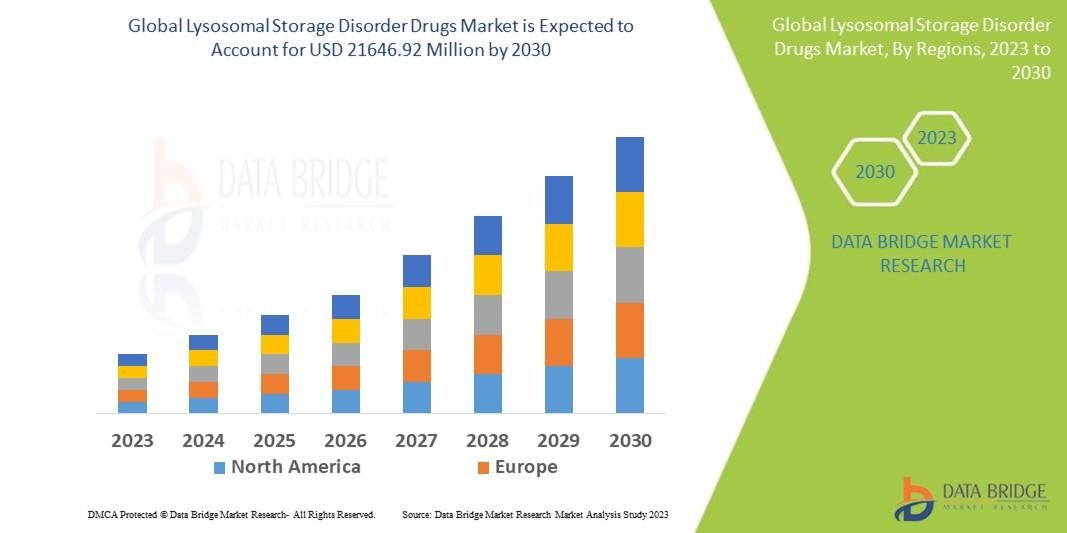
Global lysosomal storage disorder drugs market size was valued at USD 10.76 billion in 2024 and is projected to reach USD 21.93 billion by 2032, growing with a CAGR of 9.4% during the forecast period of 2025 to 2032.
This Lysosomal Storage Disorder Drugs Market research report is prepared with detailed statistics and market research insights that results in sharp growth and thriving sustainability in the market for the businesses. This market research report delivers all-inclusive analysis of the market structure along with forecast of the diverse segments and sub-segments of the market. The report has estimations of Compound Annual Growth Rate (CAGR) in % value for the forecasted period that will help user or client to take decision based on futuristic chart. An excellent practice models and method of research applied for this Lysosomal Storage Disorder Drugs Market document unearths the best opportunities to succeed in the market.
Stay informed with our latest keyword market research covering strategies, innovations, and forecasts. Download full report: https://www.databridgemarketresearch.com/reports/global-lysosomal-storage-disorder-drugs-market
Lysosomal Storage Disorder Drugs Market Segmentation and Market Companies
Segments
- Type: The global lysosomal storage disorder drugs market can be segmented based on the type of disorders, including Gaucher's disease, Fabry disease, Pompe disease, Mucopolysaccharidosis (MPS), and others. Each type requires specific drugs for treatment which are tailored to address the underlying pathophysiology of the disorder.
- Therapy Type: This segment categorizes the market based on the type of therapies provided for lysosomal storage disorders, such as enzyme replacement therapy (ERT), substrate reduction therapy (SRT), chaperone therapy, and others. Each therapy type aims to alleviate the symptoms and progression of the diseases.
- Distribution Channel: The market can also be segmented by distribution channel, including hospital pharmacies, retail pharmacies, and online pharmacies. The accessibility and availability of these drugs through different channels play a vital role in reaching patients in need of treatment.
Market Players
- Sanofi Genzyme: Sanofi Genzyme is a prominent player in the global lysosomal storage disorder drugs market, offering a wide range of therapies for various disorders such as Gaucher's disease and Pompe disease. Their innovative research and development efforts contribute significantly to the advancement of treatment options.
- Shire (Takeda Pharmaceutical Company Limited): Shire, now part of Takeda Pharmaceutical Company Limited, is a key player known for its expertise in developing drugs for rare diseases, including lysosomal storage disorders. With a strong pipeline of therapies, Shire continues to make significant contributions to improving patient outcomes.
- Amicus Therapeutics: Amicus Therapeutics focuses on developing precision therapies for rare genetic diseases, including lysosomal storage disorders. Their commitment to advancing novel treatments and improving the quality of life for patients sets them apart in the market.
- BioMarin Pharmaceutical Inc.: BioMarin Pharmaceutical has established itself as a leading biopharmaceutical company addressing unmet medical needs, including lysosomal storage disorders. Their cutting-edge research and development initiatives drive the innovation of therapies for rare diseases.
- Ultragenyx Pharmaceutical Inc.: Ultragenyx Pharmaceutical is a key player in the market, dedicated to developing treatments for various lysosomal storage disorders. Their emphasis on precision medicine and tailored therapies underscores their commitment to meeting the unique needs of patients.
The global lysosomal storage disorder drugs market is witnessing a significant shift towards personalized medicine and targeted therapies, driven by advancements in understanding the molecular basis of these rare genetic disorders. Market players are increasingly investing in innovative research and development initiatives to develop more efficacious and safer treatment options for patients with lysosomal storage disorders. With a growing emphasis on precision medicine, companies are focusing on tailoring therapies to address the specific genetic mutations underlying these disorders, thereby improving therapeutic outcomes and patient quality of life.
Moreover, collaborations and partnerships among pharmaceutical companies, research institutions, and healthcare organizations are playing a crucial role in accelerating drug development and expanding the market reach of lysosomal storage disorder drugs. By leveraging synergies and expertise across different stakeholders, the industry is able to streamline the drug discovery and development process, ultimately bringing novel therapies to the market more efficiently.
Furthermore, regulatory agencies and governing bodies are increasingly recognizing the unmet medical needs of patients with lysosomal storage disorders, leading to expedited approval processes for innovative therapies. This regulatory support fosters a conducive environment for market players to invest in research and development activities, knowing that their efforts are likely to be rewarded with timely approvals and market access.
Additionally, the growing awareness among healthcare professionals, patients, and caregivers about lysosomal storage disorders is driving early detection and diagnosis, thereby increasing the demand for treatment options. This heightened awareness is also leading to improved screening programs and diagnostic tools, ensuring that patients receive timely interventions and personalized care.
In conclusion, the global lysosomal storage disorder drugs market is poised for significant growth in the coming years, fueled by advancements in precision medicine, collaborative research efforts, regulatory support, and increased awareness. Market players are well-positioned to capitalize on these opportunities by continuing to innovate and develop novel therapies that address the specific needs of patients with these rare genetic disorders. The future outlook for the market looks promising, with a focus on improving patient outcomes and transforming the treatment landscape for lysosomal storage disorders.The global lysosomal storage disorder drugs market is undergoing a transformative phase driven by several key factors. One significant trend shaping the market is the increasing shift towards personalized medicine and targeted therapies. This trend is propelled by the growing understanding of the molecular basis of lysosomal storage disorders, allowing for the development of more precise and effective treatment options tailored to individual patients. Market players are investing heavily in research and development to create innovative therapies that offer improved efficacy and safety profiles, ultimately enhancing patient outcomes and quality of life.
Collaborations and partnerships between pharmaceutical companies, research institutions, and healthcare organizations are playing a pivotal role in advancing drug development and expanding the market reach of lysosomal storage disorder drugs. By leveraging collective expertise and resources, stakeholders can accelerate the discovery and development of novel therapies, bringing them to market more efficiently. These collaborative efforts facilitate knowledge sharing, streamline processes, and drive innovation in the field.
Regulatory support from agencies and governing bodies is also shaping the market landscape for lysosomal storage disorder drugs. Recognizing the significant unmet medical needs of patients with these rare genetic disorders, regulatory agencies are expediting approval processes for innovative therapies. This supportive regulatory environment incentivizes market players to invest in research and development with the confidence that their efforts will lead to timely approvals and market access, fostering a conducive climate for innovation in the sector.
Furthermore, increasing awareness among healthcare professionals, patients, and caregivers about lysosomal storage disorders is driving early detection and diagnosis rates. This heightened awareness is not only leading to improved screening programs and diagnostic tools but also fueling the demand for effective treatment options. As a result, the market is witnessing a surge in demand for therapies that can address these rare genetic disorders, underscoring the importance of personalized care and early interventions.
In conclusion, the global lysosomal storage disorder drugs market presents significant growth opportunities for market players poised to capitalize on the trends of personalized medicine, collaborative research initiatives, regulatory support, and increased awareness. By focusing on innovation and developing tailored therapies, companies can meet the specific needs of patients with lysosomal storage disorders, ushering in a new era of treatment advancements and improved patient outcomes in the market.
Learn about the company’s position within the industry
https://www.databridgemarketresearch.com/reports/global-lysosomal-storage-disorder-drugs-market/companies
Frequently Asked Questions About This Report
What is the long-term future outlook for the Lysosomal Storage Disorder Drugs Market (2033 and beyond)?
What is the anticipated market size for Software offerings in 2025?
What is the growth of Lysosomal Storage Disorder Drugs Market in the Agriculture tech market?
How is Energy Efficiency in manufacturing driving Lysosomal Storage Disorder Drugs Market share?
How is the shortage of skilled professionals affecting the Lysosomal Storage Disorder Drugs Market?
What is the impact of Predictive Analytics on Lysosomal Storage Disorder Drugs Market inventory?
What is the role of regulatory sandboxes in the Lysosomal Storage Disorder Drugs Market?
How are customized/personalized Lysosomal Storage Disorder Drugs Market offerings performing?
How do Bundling strategies affect the Lysosomal Storage Disorder Drugs Market CAGR?
What are the signs of a Market Rebound for Lysosomal Storage Disorder Drugs Market?
What is the impact of Natural Disasters on Lysosomal Storage Disorder Drugs Market production hubs?
What growth opportunities exist in the Lysosomal Storage Disorder Drugs Market for new entrants?
What are the supply chain vulnerabilities in the Lysosomal Storage Disorder Drugs Market?
Browse More Reports:
Global Jam, Jelly and Preserve Packaging Market
Global Sustainable Sportswear Market
Global Edible Oils Market
Europe Used Car Market
Global Methanol Market
Global Modular Construction Market
Europe Modular Construction Market
Global Fragrance Diffuser Market
Global Procurement Outsourcing Services Market
Global Arcade Gaming Market
Global Sesame Seeds Market
Global Core Banking Solutions Market
Global Lingerie Market
Global Lithium Ion Battery Market
Global Point-Of-Care-Testing (POCT) Market
Contact Us:
Data Bridge Market Research
US: +1 614 591 3140
UK: +44 845 154 9652
APAC : +653 1251 980
Email:- corporatesales@databridgemarketresearch.com"

 English
 Arabic
 French
 Spanish
 Portuguese
 Deutsch
 Turkish
 Dutch
Dutch
 Russian
 Romaian
 Portuguese (Brazil)
 Greek
Greek