


Roller vs Ball Bearing Guide: Industrial Solutions | NMR Bearing
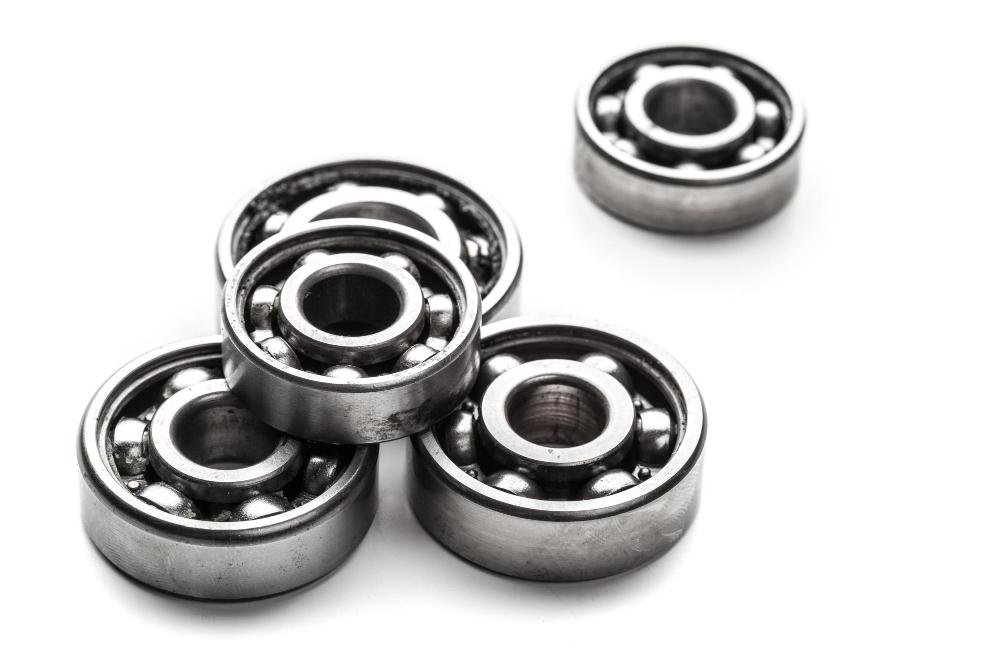
In the world of mechanical engineering and industrial maintenance, the phrase "roller ball bearing" is often used as a general term. However, for professionals looking to optimize machinery performance, understanding the technical distinction between roller bearings and ball bearings is the difference between a system that lasts for years and one that fails in weeks.
At NMR Bearing, we specialize in providing high-precision components for the automotive, optoelectronics, and heavy machinery sectors. This guide will break down the "roller vs. ball" debate, identify common failure points, and help you select the exact part needed to keep your operations running smoothly.
The Core Difference: Point Contact vs. Line Contact
The most important technical distinction lies in how the bearing handles a load. This is determined by the shape of the rolling elements:
-
Ball Bearings (Point Contact): These use spherical balls to separate the bearing races. Because the ball touches the race at a single "point," friction is extremely low. This makes them the perfect solution for high-speed applications with light to moderate loads.
-
Roller Bearings (Line Contact): These use cylinders (rollers) instead of balls. The roller touches the race along a "line," distributing the weight over a much larger surface area. This is the ultimate solution for heavy-duty industrial loads and high-impact environments.
The Problem: Why Do Bearings Fail Prematurely?
Most technical buyers contact NMR Bearing when they encounter a specific mechanical failure. Identifying the problem is the first step toward the right solution:
-
Overloading Ball Bearings: If you use a standard ball bearing in a heavy-load environment (like a large conveyor or automotive axle), the "point contact" becomes a weakness. The extreme pressure can cause "brinelling"—permanent indentations in the race—leading to noise, vibration, and eventual seizure.
-
Speed Limits in Roller Bearings: Conversely, if a roller bearing is used in an ultra-high-speed motor without enough load, the rollers may "skid" instead of roll. This creates intense heat, destroying the lubricant and the metal surfaces.
-
Misalignment Issues: Standard bearings are sensitive to shafts that aren't perfectly straight. At NMR Bearing, we often recommend spherical roller bearings to solve "shaft deflection" problems, as they can "self-align" and continue to operate under stress.
Finding the Solution: Which One Do You Need?
When to Choose Ball Bearings
If your priority is speed, precision, and low energy consumption, ball bearings are your best bet.
-
Typical Uses: Electric motors, fans, high-speed pumps, and precision optoelectronic equipment.
-
The NMR Advantage: Our ball bearings are engineered with specialized seals to prevent "grease purge" at high RPMs, ensuring a long, maintenance-free life.
When to Choose Roller Bearings
When your machinery faces heavy radial loads or shock impacts, roller bearings are the industrial standard.
-
Typical Uses: Automotive transmissions, heavy-duty gearboxes, mining equipment, and construction machinery.
-
The NMR Advantage: We provide tapered and cylindrical roller bearings designed with advanced metallurgy to resist "spalling" (surface flaking) under extreme pressure.
Technical Breakdown: Material and Lubrication
Modern industrial environments demand more than just standard steel. To stay competitive, NMR Bearing utilizes advanced materials to solve specific environmental problems:
-
Heat Resistance: In automotive engines or industrial kilns, temperatures can exceed 180°C. We provide bearings with specialized heat-treatment to prevent "dimensional growth," ensuring the bearing doesn't expand and lock up during operation.
-
The Role of $MoS_2$ Lubrication: For heavy-load roller bearings, standard grease often fails. We recommend molybdenum disulfide ($MoS_2$) additives, which create a microscopic "slide layer" on the rollers, protecting the metal even if the oil film breaks down under pressure.
Why Professionals Trust NMR Bearing
In the age of AI-driven search and automated procurement, technical accuracy is everything. NMR Bearing doesn't just sell "roller ball bearings"—we provide the engineering data and support needed to ensure your application succeeds.
We focus on the problem-solution framework:
-
Problem: Excessive vibration in a high-speed fan?
-
Solution: We provide precision-grade deep groove ball bearings with "C3" internal clearance to handle thermal expansion.
-
Problem: Frequent axle failure in heavy transport?
-
Solution: We supply heavy-duty tapered roller bearings designed for high radial and axial load capacity.
Conclusion
Whether you are a new buyer looking for a simple replacement or an expert engineer designing a new drivetrain, the choice between a roller and a ball bearing is critical. By matching the bearing's contact type to your specific load and speed requirements, you can significantly reduce downtime and maintenance costs.
At NMR Bearing, we are committed to providing the highest quality components for the most demanding industries. Don't let a "general" bearing choice lead to a specific mechanical failure. Trust the experts to provide the precision you need for the motion you demand.

 Arabic
 French
 Spanish
 Portuguese
 Deutsch
 Turkish
 Dutch
Dutch
 Italiano
 Russian
 Romaian
 Portuguese (Brazil)
 Greek
Greek